
This is a page for any reflective articles that old boys
can contribute telling us of their life experiences, including their careers,
travels, families, joys and traumas.
These are to be articles that are longer and weightier than will be found on
the news page.
Many have an interesting story to tell and an increasing number of us have the
time to sit down and record it, so let’s hear your life stories (max. 2000
words, if possible).
_____________________________________

by
Royston Snart (1954 -
1961)
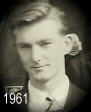 “How on earth did I end
up here?” Probably a frequent rhetorical question for anyone living far from
their former home. “Here” in my case being Chiclana on the Atlantic coast of SW
Spain, in the province of Cádiz (Spain has 52 provinces, and this is one of the
largest, in case you wondered). I often refer to it as the bottom left-hand
corner of Europe, almost in Africa. In fact, there is a rather curious road
sign at a minor road junction near here that just points to “Africa”. Cadiz is
still somewhat less developed than the contiguous provinces of Malaga
(containing the infamous Costa del Sol) and that of the regional capital,
Seville, not far to the north of us
“How on earth did I end
up here?” Probably a frequent rhetorical question for anyone living far from
their former home. “Here” in my case being Chiclana on the Atlantic coast of SW
Spain, in the province of Cádiz (Spain has 52 provinces, and this is one of the
largest, in case you wondered). I often refer to it as the bottom left-hand
corner of Europe, almost in Africa. In fact, there is a rather curious road
sign at a minor road junction near here that just points to “Africa”. Cadiz is
still somewhat less developed than the contiguous provinces of Malaga
(containing the infamous Costa del Sol) and that of the regional capital,
Seville, not far to the north of us
Again in my case, perhaps
“end up” is a bit too terminal, having just turned 61. Who knows what further
migrations might be possible in the years remaining? Still reasonably fit
(having survived a modest heart attack some 8 years ago, and some subsequent
routine surgery to unclog the coronaries). Still trying to educate myself, FGS
and UCL having made a good start, but there’s loads more stuff I am woefully
ignorant about. Still working, now as a translator (from home, thanks to the
wonders of computing and the Internet, and yes, I really do consider them
wonders, in the truest sense, much more so than any of the original Seven).
Happily married (second time around), with a semi-independent son at home, and
two very independent daughters who seem well-settled, well-married and
successfully parenting my four delightful grandchildren, all apparently
healthy, happy and living much too far away from me, in the NE of England.
Hexham, Northumberland was my
immediate former “home” before moving here 15 years ago, but is not really
where my roots are: Farnham, and particularly the area between Farnham and
Tilford, I still count as my geographic origins, despite birth in London and
sojourns in other memorable places like Camberley, Montreal, Balham, Banbury and Crawley. But then again, perhaps
I’m too comfortable here to risk another uprooting, although Adelina, my
Spanish but very anglophile wife, claims she would not protest about moving
back to England where she has already lived for eight years, in which time we
met and “got together”. If this hypothetical homecoming were to transpire, any
protesting done would be by our son Stephen, who was just 9 when we brought him
here, supposedly against his will, as he often claimed in his teenage years;
now 24 and working, he still prefers home comforts and mama’s cooking to the
uncertain circumstances of independence. Although still fluent in English
(thanks partly to me and mostly to the Internet), Stephen has had most of his
education here, and now thinks in Spanish rather than English (which I don’t),
works here and probably sees his professional future in Spain (the much bigger
question being “what profession?”). Oh yes, and he’s got a lovely girlfriend,
too, with an amazing tolerance for his anglo-hispanic eccentricities.
So, to return to the “how?”
of the leading question. You surely know the hackneyed saying, of unknown
authorship, that behind every successful man ……? Well, I think it applies to
other men, too, me included. If I had to pinpoint the single main reason for
being here, it must be that my wife is here and is from here, and her family,
four younger sisters and brother, are here. And I have got on very well with
all of them for nearly 20 years now, and particularly with her mother when she
was alive. Another contributory factor is that the move here coincided with a
feeling that a fundamental life change would be “a good thing”. I had been
through my very own mid-life crisis earlier in the 1980’s, starting with an
unforeseen but foreseeable redundancy, which then deteriorated to the stage
where it seemed things couldn’t get any worse, but did. An experience I
wouldn’t wish on anyone. Then from 1983 I had been working hard and with
considerable satisfaction as Publicity Manager for a smallish local-based
company in an interesting market sector (all of my previous 5 jobs for 5 different
companies since graduating in Economics had been in various aspects of
marketing, so I guess I regarded myself as a professional in that area of
management). Then the owner of the firm, to whom I had felt a personal debt of
gratitude for giving me the job when I really needed it, started taking strange
contradictory policy decisions; apart from being incomprehensible, this
behaviour generated insecurity, and hence ill-feeling, among what had been the
effective management team of a happy integrated company. So in 1988 I got out.
But some years before this, I
had met Adelina, who also worked for the company, and on one of several visits
to her home town of Jerez (also the home of authentic sherry wine, the
producers of which have helped to sustain my current self-employment), we had
bought a holiday home at La Barrosa, then an undeveloped coastal zone of
Chiclana, about 50 km south of Jerez. It was not even a resort then, just a
sweeping 6 km long bay with a glorious clean beach, wide swathes of sand dunes,
bordered by coastal pine woods and scrubland, with small clusters of white
chalets linked by dirt tracks. Most properties were owned then by local
families, from Chiclana itself and nearby San Fernando and Cadiz.
The thinking behind this
purchase was that we would hope to spend future holidays there, and with some
frequency. However, it then became a factor in the fundamental “life change”
decision. And after a fairly short process of reviewing options, we decided to
come here to live, which implied working here too, of course. Adelina started
applying for positions as a bilingual management secretary in the sherry
industry (her work before she moved to England) and I decided to become an EFL
teacher (English as a foreign language), and booked myself onto an intensive
training course. Rather surprisingly, I then realised that, for all those years
since starting to work in industry, there had been a teacher inside me, not
exactly struggling to get out but at least dormant. It was good fun, and I
silently gave thanks over and over again to my English and language teachers at
FGS, Mike Foster, D. W. “Nick” Nicholson, H. (Harold?) Beadman for French, and
Mr Brink for German. I found a deep-rooted affection for my mother-tongue (yes,
it does sound corny) and realised that I knew quite a lot about structure,
grammar, idioms and all the rest that goes to make English a pretty effective
means of communication. I also found that there is a healthy demand among
foreigners who want to learn English, and for many, personal tuition is the
best way of achieving this. My grounding in marketing communication and
previous involvement in industrial training were also useful.
Well, to accelerate this
narrative a bit to reach 2003 before you doze off, Adelina got a job as secretary
to the MD of one of the leading sherry companies in Jerez, we sold up in
England, moved to Jerez and I started a new life as an English teacher, giving
private lessons mainly to young professionals. I probably could, but won’t,
write a book about the pleasures and problems of teaching English, and a key
part would be about building the student’s self-confidence and stimulating
their desire to communicate on topics of genuine and preferably passionate
interest. Moving ahead to about 1994, and having acquired some academics among
my portfolio of student-customer-friends, I started getting requests to do
translations. A couple of early jobs were scientific research articles for
publication in specialist English-language journals, from researchers in the Science
Faculty of Cadiz University. Now I discovered that, alongside the dormant
teacher, I had had a dormant scientist inside me – well, rather a would-be
science student. This must partly have been the result of my avid reading of
popular science books and articles over many years.
What better way to start to
learn something about real up-to-date science, as done in local laboratories,
with field sampling, sophisticated instruments, statistical analysis and so on,
than to offer a translating service to scientists? There was a real demand
since, although most academic scientists read English proficiently and can
converse adequately at international conferences, most do not have the time or
the fluency to write to the high standards demanded in the competitive arena of
top-notch professional journals. It also helps that a scientist’s career
progress depends crucially on their record of articles published. Once I had a
toe-hold and was demonstrating competence in English and a readiness to ask
questions to clarify what I didn’t understand (I refuse to write stuff in
English that isn’t reasonably clear to me as a layman, whatever the field),
networking has taken me into a wider range of departments and faculties,
particularly economics and medicine. I have also diversified into commercial
work, starting with the Jerez sherry companies, and technical translations
(there is local shipbuilding and defence engineering activity). I particularly
enjoy combining my translation work with my “old” publicity and marketing skills,
helping to produce effective sales brochures and advertising copy in English.
As I became more established
in my new profession, it was soon more profitable than teaching. I also found
that work could more easily be received and delivered, as well as being
produced, electronically - I had become a “tele-worker” almost without
realising it - and could therefore practise my profession wherever there was a
computer and phone connection. Hence we sold up in Jerez and moved here to live
permanently in our place on the coast. I do however enjoy meeting my customers,
so I regularly visit the various faculties and hospitals where clients are
based, and occasionally attend for a briefing by a commercial client. Most new
clients come to me by personal recommendation, and as time has passed, the
range has extended to other Spanish universities, translation and advertising
agencies, here and in other European countries.
The downside, of course, is
the lack of security of income, but thinking back to my previous “secure” jobs,
it is more the case that this is just one other kind of insecurity among others
– one just has to spread the risks, and ride the financial ups and downs. The
upside is the independence, the flexibility, the variety, the sheer “out of the
blue” 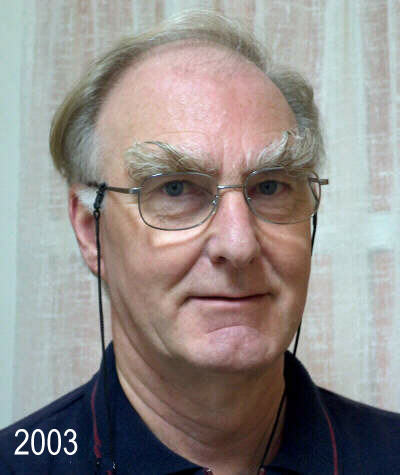 opportunity
to plunge into a novel subject area without forewarning. Among some of the
different things I’ve tackled are a film script, a “coffee table” book by a
local photographer, a book of “tapas” recipes, a transcript of a Harvard
Business School series of videos, and the prescriptions of a 17th century
Spanish doctor. But what I would really like to try my hand at is a good novel.
Does anyone know of a Spanish novelist looking for an enthusiastic translator?
opportunity
to plunge into a novel subject area without forewarning. Among some of the
different things I’ve tackled are a film script, a “coffee table” book by a
local photographer, a book of “tapas” recipes, a transcript of a Harvard
Business School series of videos, and the prescriptions of a 17th century
Spanish doctor. But what I would really like to try my hand at is a good novel.
Does anyone know of a Spanish novelist looking for an enthusiastic translator?
Cádiz,
Friday, 12 December, 2003